In this article
Choose a verified support route, write a concise case summary and recognize requests that would give someone control of your account.
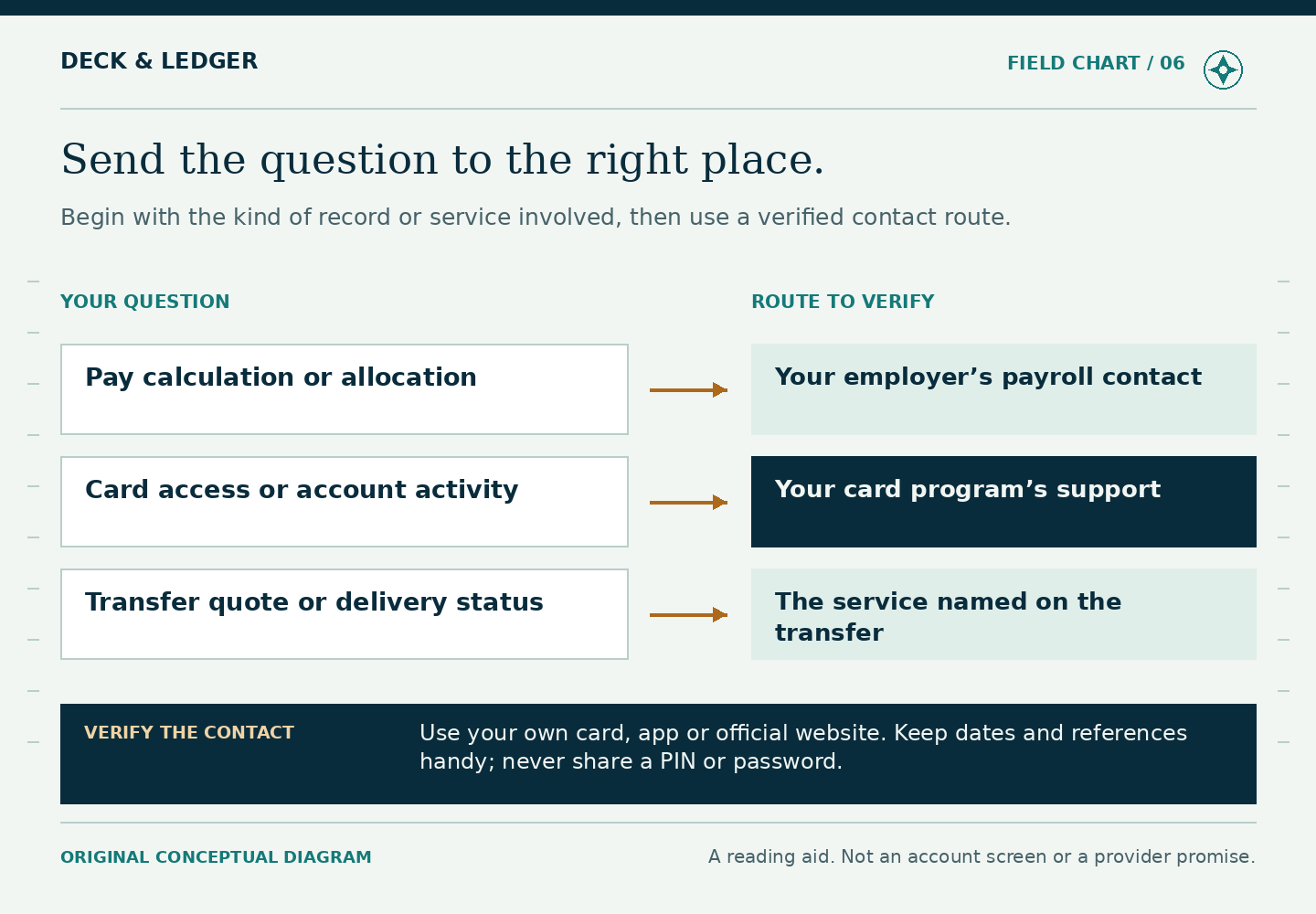
When wages or a transfer appear to be missing, the fastest-looking contact is not always the right one. A search advertisement, social-media reply or unsolicited call can imitate the language of customer service. Start from a route you already know is official, then provide enough information to investigate the problem without surrendering access to the account.
Use an independently verified starting point
The official Brightwell crew page links to support and advises using a single clear message about the main issue. It also explains that contacting support without signing in can require identity verification. Official card and transfer help is also available.
Open the official app you already use or navigate from that verified public site. Be cautious about look-alike domains, shortened links and contact details posted in comments beneath an unrelated article. A copied logo and a familiar product name do not establish who controls the destination.
Deck & Ledger is an independent publication. We do not provide account support, enroll cardholders, verify identities or handle disputes. Do not send us card numbers, passport images or login information. Our role is to help you prepare a clearer question for the appropriate official channel.
Write a case summary that can be investigated
Begin with the task and the observed problem. For a transfer, include the existing reference, date, amount, currency, selected delivery method and status. For a purchase, include the merchant description and whether it is pending or posted. For access, include the exact error and the stage at which it appears.
Then say what you have already checked and what you need answered. “Please confirm whether this transfer exists and its current status” is more actionable than “Everything is broken.” Avoid including a full history of unrelated problems in the first paragraph. If an issue affects immediate access to essentials or you are about to lose connectivity, say that plainly without demanding an outcome support cannot verify.
Use a short, factual template
A practical message can follow this pattern: “I am trying to complete this task. At this date and time, the account showed this status or error. The relevant transaction reference is this one. I have already checked these two things. Please confirm the next step and whether I should take any further action while this is investigated.”
Fill the placeholders inside the official channel. Do not paste sensitive identifiers into a public template generator. If support requires an identity document, establish that you are using the official process and supply it only through the requested secure route. A public article cannot determine which identity evidence your case will need.
Know what a support case does not require
The FTC’s verification-code guidance warns that scammers seek codes to log in as the account holder. Do not read a login code to an unexpected caller, send a password in chat or share a PIN so somebody can “test” the card. Keep authentication inside the official process you initiated.
The FTC also warns about requests to move money to a supposedly safe place. Treat a transfer demanded for protection as a warning sign. Stop the conversation and contact the real provider independently. A caller’s knowledge of your name, employer or recent problem is not a substitute for that verification.
Share screenshots carefully
A screenshot can make an error clear, but it may also expose unrelated transactions, a full account identifier or a one-time code. Capture the relevant message and review the image before sending it. Redact information that is unnecessary for the question where doing so preserves the evidence support needs.
Keep the original privately if it may be useful for the investigation. Do not alter the amount, date or status you are asking support to review. If the system requests a specific document or unedited record, follow its official instructions rather than inventing a substitute that could confuse the case.
A support-impostor example
Imagine Noor posts a general complaint that a transfer is delayed. Someone replies offering private “priority Brightwell support” and asks for a verification code. Noor does not continue. She uses the official app, identifies the existing transfer reference and asks about its status. The urgent problem remains real, but the unsolicited helper has not earned access to it.
If Noor already shared a code or other access information, she tells genuine support promptly and follows the official recovery process. She records what was disclosed and when without reposting the secret. This helps explain the incident while avoiding further exposure.
Track the case until the answer is usable
Save the reference and the promised next step, distinguishing a response estimate from a guaranteed resolution time. Follow up in the existing case when possible, adding new evidence rather than repeating the same message. A useful closing answer explains what happened, what changed and whether anything remains for you to do.
For a missing card, report immediately using the incident checklist. For a confusing purchase, collect the pending-payment evidence. The consistent habit is to verify the channel first, then make the smallest clear disclosure that allows the real issue to be handled.